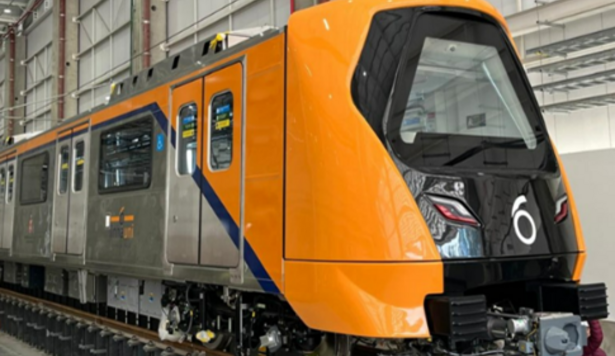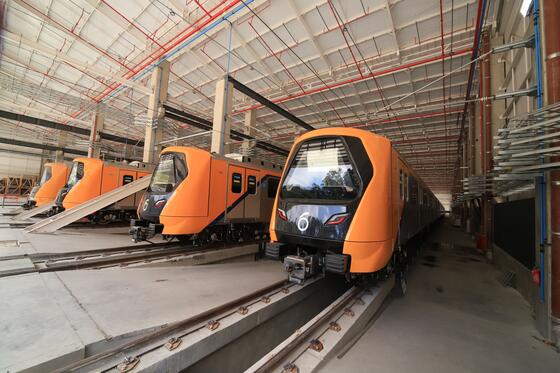
Alstom celebrates the start of operations on Line 6-Orange with trains produced in Taubaté
Alstom celebrates the start of operations on Line 6-Orange with trains produced in Taubaté
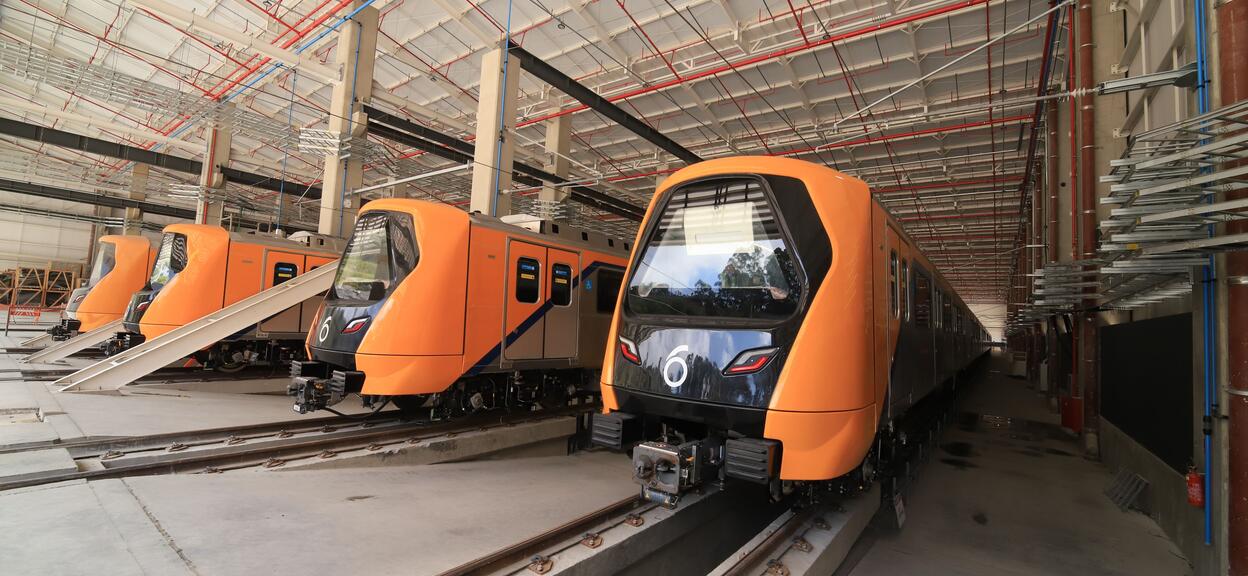
Alstom’s metro trains are ready to carry thousands of passengers on the new Line 6 (Orange). Copyright: Concessionária Linha Universidade
Press contact - Philippe Molitor
Philippe Molitor
Press contact - Brazil, Chile and Argentina
Vinicius Riqueto
-
Alstom is supplying 22 Metropolis trains for Line-6, produced at our factory in Taubaté, in the state of São Paulo
-
This project has created around 5000 jobs and involved more than 120 suppliers across Brazil
-
The project contributes to transforming mobility in São Paulo, reducing travel times and expanding access to education and work
2 July 2026 – Alstom, a global leader in smart and sustainable mobility, celebrates the inauguration of São Paulo's Line 6-Orange metro, a milestone that marks the beginning of commercial operation of the section between Brasilândia and Perdizes. The project is a public-private partnership (PPP) of the São Paulo State Government, with the LinhaUni Concessionaire, and represents a strategic advancement for urban mobility in the city of São Paulo.

"The inauguration of the first section of Line 6-Orange is a very special moment for Alstom. For over 70 years in Brazil, we have actively participated in the construction and evolution of rail mobility in the country, and it is a source of pride to see trains manufactured in Taubaté entering operation in this emblematic project for São Paulo."
Alstom has already delivered 12 six-car Metropolis trains, manufactured at its industrial unit in Taubaté (SP), as part of a total fleet of 22 trains supplied it is producing the line. Deliveries of the trains began in July 2025. Each train is subjected to extensive testing to validate performance, reliability, and safety standards. In addition to meeting all contractual and regulatory requirements, the trains were subjected to additional protocols aligned with Alstom's global quality policies, reinforcing the company's commitment to operational excellence.
With a capacity to transport up to 2,044 passengers and a speed of up to 80 km/h, the trains are manufactured in stainless steel, making them lighter and more energy efficient, as well as extremely durable, built to last for over 40 years. The interior layout was designed to offer comfort and a better an optimized experience for passengers, with accessibility, ergonomics, and safety solutions defined from simulations carried out in Alstom's Lab 4.0, the company's virtual reality laboratory.
The University Line
Known as the “university line,” Line 6-Orange will connect at least seven higher education institutions in the city of São Paulo, as well as several schools located near Avenida Paulista, expanding access to education and significantly reducing travel times.
Line 6-Orange also reinforces the commitment to more sustainable and inclusive mobility. The trains developed by Alstom incorporate technologies that reduce energy consumption and carbon emissions, contributing to a more environmentally efficient transport system. Furthermore, the project expands access for the population to job opportunities, education, and essential services, promoting social inclusion and improving quality of life, in line with Alstom's strategy of supporting the sustainable development of cities.
“The inauguration of the first section of Line 6-Orange is a very special moment for Alstom. For over 70 years in Brazil, we have actively participated in the construction and evolution of rail mobility in the country, and it is a source of pride to see trains manufactured in Taubaté entering operation in this emblematic project for São Paulo. In addition to expanding access to job opportunities, education, and essential services for the population, Line 6-Orange also strengthens the national rail industry by boosting local production and a broad supply chain. We will continue alongside our partners, contributing with safe, innovative, and sustainable solutions for millions of passengers,” says Suely Sola, General Director of Alstom Brazil.
“It is with great pride that we celebrate the early delivery of six stations on Line 6-Orange. The new line will benefit thousands of people who rely on public transport every day to work, study, seek healthcare, and enjoy leisure activities. Line 6 will transform people’s lives, creating a legacy in mobility, development, and increased opportunities,” says Francisco Pierrini, CEO of Concessionária Linha Universidade.
With a length of 15,3 km and 15 stations, Line 6-Orange will connect the Brasilândia neighborhood in the North Zone to the São Joaquim Station in the city center, reducing a journey that currently takes up to an hour and a half by bus to approximately 23 minutes. The line is expected to transport approximately 633,000 passengers per day and will establish itself as one of the city's main structural mobility axes. The civil works are being carried out by ACCIONA.
The Metropolis trains
Alstom’s metro trains have been meeting diverse urban mobility needs around the world for over 60 years. Designed to operate on both new and existing infrastructure, the Metropolis platform stands out for its flexibility, offering configurations tailored to varying capacity and operational requirements—such as the trains supplied for São Paulo Metro Line 6, which are part of this platform. With trainsets ranging from 2 to 9 cars, different gauges, power systems, and customizable interior layouts, the trains can operate in manual or fully automated modes.
Metropolis trains also incorporate solutions that prioritize energy efficiency, low noise levels, and high recyclability, contributing to reduced environmental impact. To date, more than 35,000 metro cars have been ordered or are in operation across over 70 cities in around 40 countries, reinforcing Alstom’s position as a global leader in urban rail mobility.
From Taubaté to the world
Inaugurated in 2015, the Alstom factory in Taubaté is a center of excellence in the production of stainless steel passenger cars and has received R$ 130 million in investments over the last four years as part of the company's growth strategy in Brazil. The plant is strategically located in an industrial hub, close to two of the country's main highways, the Dutra and the Carvalho Pinto, and the Port of Santos, the largest port complex in Latin America.
Over the past three years, Alstom in Taubaté has produced or is producing more than 170 trains (over 940 cars) for national and international projects. The plant was also responsible for producing the Carioca Light Rail Vehicle (VLT), manufactured in record time for the 2016 Olympics in Brazil. This project was the second in the world to have a 100% catenary-free system, with underground power supply.
Alstom Brazil
Present in Brazil since 1955, Alstom has actively contributed to the development of infrastructure and mobility in the country, promoting social progress while respecting the environment. A leader in rail mobility in the Brazilian market, the company also holds the largest installed signaling base in Latin America, with over 7,350 km of signaled lines and more than 2,000 onboard systems in operation.
Alstom promotes mobility through all segments of rail transport, delivering solutions to major passenger operators in Brazil, including São Paulo (SP), Rio de Janeiro (RJ), Porto Alegre (RS), Fortaleza (CE), Recife (PE), and Brasília (DF). Its rolling stock production and control and signaling systems—responsible for the safe movement of trains—are also part of mobility projects in other countries across Latin America and around the world, such as South Africa, Argentina, Colombia, Chile, Ecuador, the United States, Mexico, Panama, Peru, the Dominican Republic, Romania, and Taiwan.
ALSTOM™ and METROPOLIS™ are protected trademarks of the Alstom Group.