


Alstom celebrates 70 years in Brazil and launches its first Impact Report
Alstom celebrates 70 years in Brazil and launches its first Impact Report

Press contact - Latin America
Ana Caiasso
Press contact - Brazil, Chile and Argentina
Vinicius Riqueto
-
The document brings together key economic, social and environmental indicators and reinforces the company's commitment to innovation, local development and sustainable mobility
-
Present in the country since 1955, the company strengthens the national industry, contributes with almost 6,000 direct and indirect jobs and expands railway infrastructure for global markets
-
Alstom products and technology are present in 81% of the country's passengers rail transport
São Paulo, 26 November 2025 – Alstom, a global leader in smart and sustainable mobility, released today its first Alstom Brazil Impact Report as the company celebrates 70 years in the country. The document tells the story of Alstom’s economic, environmental and social impact in Brazil for the 2024/2025 fiscal year and traces the company’s rich history in this nation. The report comes as the company which has established itself as a key player in the Brazilian railway market throughout its history, as well as being a strategic hub for Latin America, reflects on its long term commitment to Brazil and looks forward to its next 70 years and beyond.

"Alstom’s technology helps move over 6 million passengers each day in Brazil. Our nearly 1500 employees in the country build trains, components and signalling systems for Brazil and around the globe."
The report found that Alstom technology is present in 81% of passenger rail transport in Brazil. Last fiscal year alone, Alstom’s contribution to this market is equivalent to R$ 763 million to the Brazilian GDP, of which R$ 600 million comes from indirect impacts generated by their supply chain. Alstom’s activities in Brazil supported more than 5,800 direct and indirect jobs in it’s last fiscal year.
Alstom’s extensive production chain, is made up of 606 national suppliers: 78% of Alstom's purchases in Brazil are made locally, injecting €144 million into the economy and strengthening the country's industrial ecosystem.
In Latin America, Alstom has a presence in 6,000 kilometres of signalling and more than 2,000 embedded systems in operation, making it the largest installed base in the region. The company promotes mobility through all its rail transport product lines, delivered to the main passenger operators in Brazil, such as in São Paulo (SP), Rio de Janeiro (RJ), Porto Alegre (RS), Recife (PE), Belo Horizonte (MG) and Brasília (DF). The production of rolling stock and control and signalling systems, responsible for the safe movement of trains, are also present in the development of mobility projects for other countries in Latin America and around the world, such as South Africa, Argentina, Colombia, Chile, Ecuador, the United States, Mexico, Panama, Peru, the Dominican Republic, Romania and Taiwan.
"Alstom’s technology helps move over 6 million passengers each day in Brazil. Our nearly 1500 employees in the country build trains, components and signaling systems for Brazil and around the globe. Our work actively contribute to the progress of cities and to more sustainable and inclusive mobility," says Suely Sola, managing director of Alstom Brazil and of Signalling & Infrastructure at Alstom in Latin America.
The impact of Alstom in Brazil
Read moreFrom Taubaté to the world
Opened in 2015, Alstom's factory in Taubaté is a center of excellence in the production of stainless steel train cars and has received R$ 130 million in investments over the last four years as part of the company's growth strategy. The plant is strategically located in an industrial hub, next to two of the country's major motorways, the Dutra and Carvalho Pinto, and close to the Port of Santos, the largest port complex in Latin America.
"Our industrial park is a strategic asset for Brazil. We have the capacity to meet local demand with cutting-edge technology and, at the same time, contribute with mobility solutions in various parts of the world, which reinforces our leading role in the global railway industry," emphasizes Suely.
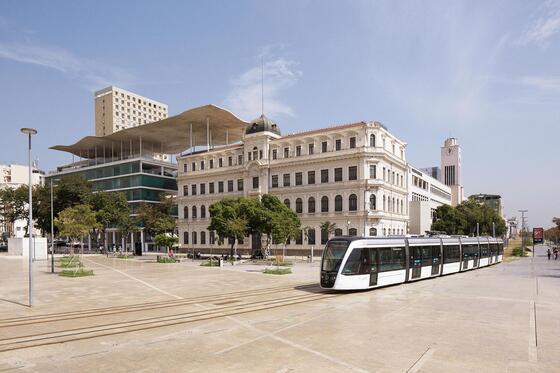
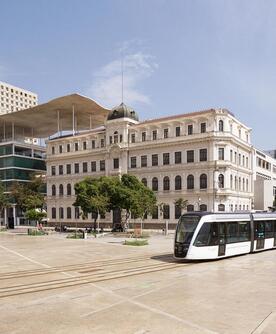
Over the past three years, more than 170 trains (over 940 cars) have been or are being produced by Alstom in Taubaté for national and international projects. The unit was also responsible for the production of 27 Citadis cars for the Rio de Janeiro tramway, which were manufactured in record time for the 2016 Olympics in Brazil. The project was the second in the world to have a 100% catenary-free system.
Among the main recent projects produced in Taubaté are:
-
Lines 8 and 9 of the São Paulo Metropolitan Train Network: supply of 36 Metropolis trains, each with eight cars, with doors and corridors that offer excellent passenger flow and accessibility, for the modernization of the network, under contract with ViaMobilidade.
-
Line 6-Orange of the São Paulo Metro: production of 22 Metropolis trains, each with six cars, for the University Line (LinhaUni), for the expansion of the metro system in the capital of São Paulo.
-
Line 7 of the Santiago Metro, Chile: production of 37 Metropolis trains with 5 cars each for the new metro line in the Chilean capital.
-
Wanda ZS Line of the Taipei Metro, Taiwan: manufacture of 35 Metropolis trains, each with four cars.
-
Phase two of the Taipei Circular Line, Taiwan: production of 29 trains with four cars each, totaling 116 cars.
-
Line 5 of the Bucharest Metro, Romania: production of 13 trains, totaling 78 cars, for the expansion of the city's underground transport system.
Commitment to sustainable mobility
Alstom Brazil continues to advance its sustainability agenda through targeted actions focused on energy efficiency, waste reduction and environmental awareness in all its operations in the country. The company maintains structured management of environmental indicators at its two main industrial sites in Brazil: Água Branca (SP) and Taubaté (SP). These sites regularly monitor data such as energy consumption, CO2 emissions, recycling rates and renewable energy use, with clear targets for continuous improvement.
By developing innovative and ecologically designed solutions with minimized carbon impact, Alstom continues to play an active role in public policy discussions on sustainable development and to accompany its customers in the transition to more sustainable transport systems. Since COP29, Alstom has published Impact Reports for France, Canada and Spain, and is now launching editions for Brazil, South Africa and Sweden. This year, in COP30, Alstom also sponsored the first Transport Pavilion in the history of the Conference, held in Belém, in association with SLOCAT (Partnership for Sustainable and Low Carbon Transport).
ALSTOM™ is a registered trademark of the Alstom Group.

