


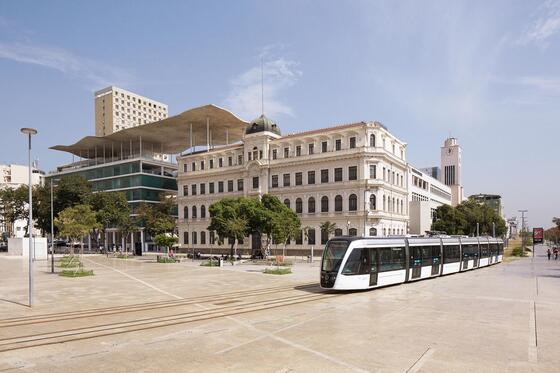
Rio de Janeiro's tramway (VLT Carioca) celebrates 10 years of operation
Rio de Janeiro's tramway (VLT Carioca) celebrates 10 years of operation
-
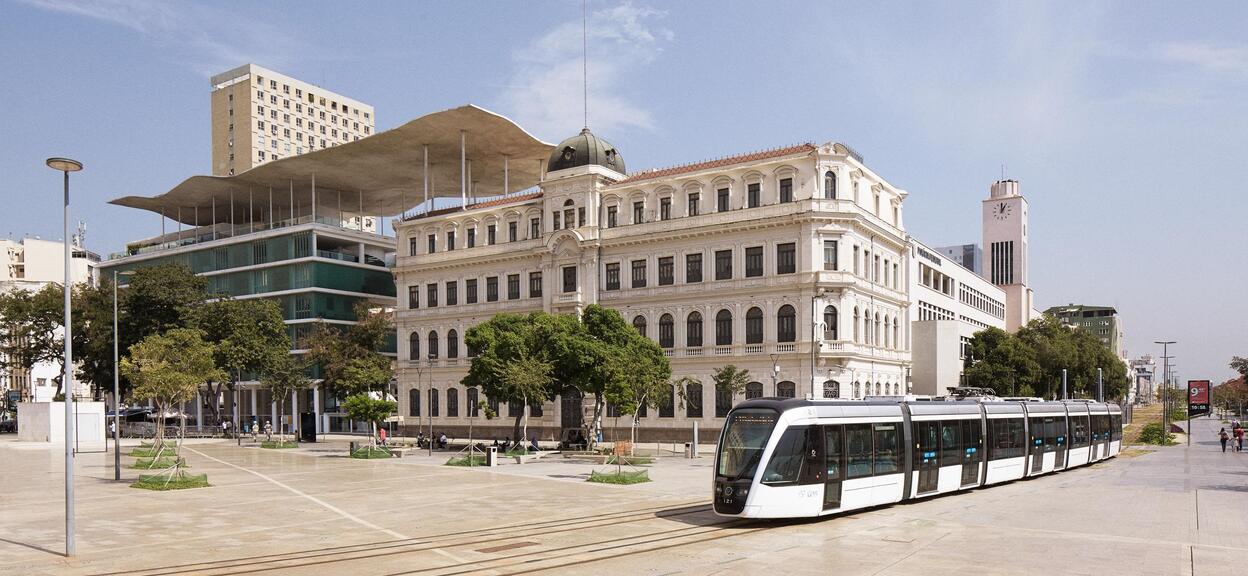
Manufactured by Alstom, this electric mode of transport has already carried more than 180 million people, serves 95,000 passengers per day, and has established itself as a benchmark for sustainable urban mobility in Brazil.
-
With exclusive catenary-free technology and 100% renewable energy, the Citadis™ tramway has become a model for urban transformation in Rio de Janeiro's downtown and port zone.
São Paulo, 11, june, 2026 – Alstom, a global leader in smart and sustainable mobility, celebrates ten years of operation of the Rio de Janeiro’s tramway – the VLT Carioca. This mode of transport has become a fundamental part of urban mobility in the city. Manufactured at Alstom's plant in Taubaté, in São Paulo state, the VLT has transported over 180 million people and serving around 95,000 passengers per day.

"The VLT Carioca is a project we are extremely proud of. Over ten years, it has transformed mobility, the landscape, and the urban experience in Rio de Janeiro. It proves that investing in sustainable transport generates a real and lasting impact on people's lives. Alstom remains committed to Rio de Janeiro and Brazil, delivering mobility solutions that transform cities."
Inaugurated for the Rio 2016 Olympic Games, the VLT was born as part of the city’s largest urban transformation in decades: the revitalization of the downtown and port zones. The VLT Carioca stands as a successful example of how major international events can serve as catalysts for lasting change in cities.
The system operates with 100% renewable energy and zero direct CO₂ emissions, connecting modes such as subway, trains, BRT, buses, ferries, and Santos Dumont Airport. With Alstom Citadis™ trains that are fully electric and catenary-free—featuring Alstom’s exclusive APS (Ground Power Supply) technology—the tramway offers quiet, safe, and sustainable journeys, preserving the urban landscape and the architecture of the Historic Downtown. Rio de Janeiro was the second city in the world to use this technology, after Dubai in the United Arab Emirates.
In 2024, the system gained momentum with the inauguration of the Gentileza Intermodal Terminal, a new mobility hub that integrates the tramway with bus lines, BRT, and other modes of transport, significantly expanding the system's area of influence and making it easier for passengers from the North Zone and Baixada Fluminense to reach downtown. The Terminal represents the consolidation of the VLT as a structuring axis of an integrated public transport network, and also demonstrates that the Olympic legacy continues to expand a decade after its inauguration.
Nowadays, the VLT Carioca operates on four lines, with 30 stops (including the Terminal Gentileza) and a fleet of 32 trains, each with a capacity for 420 passengers, covering key points in the Downtown area, Port Zone, and the city’s transport terminals. Over ten years, the system has traveled millions of kilometers connecting locals and tourists, contributing to the urban renewal of one of Rio’s most iconic areas.
"The VLT Carioca is a project we are extremely proud of. Over ten years, it has transformed mobility, the landscape, and the urban experience in Rio de Janeiro. It proves that investing in sustainable transport generates a real and lasting impact on people's lives. Alstom remains committed to Rio de Janeiro and Brazil, delivering mobility solutions that transform cities," says Suely Sola , General Director of Alstom Brazil and Director of Signaling and Infrastructure for Alstom in Latin America.
A decade of legacy, a future of expansion
The 10th anniversary of the VLT Carioca coincides with a historic moment for public transportation in Brazil. The National Urban Mobility Study (ENMU), conducted by BNDES in partnership with the Ministry of Cities, mapped 187 medium- and high-capacity transportation projects in the 21 largest metropolitan regions of the country, with estimated investments between R$396 billion and R$433 billion by 2054. Rail-based projects, including tramways, represent the largest share of investments, ranging from R$300 billion to R$355 billion.
For Alstom, rail transportation is the most efficient, safe, and sustainable solution for Brazilian cities. Present in the country for 70 years, the company is involved in 81% of passenger metro and railway transport, participating in strategic projects such as the trains and signaling systems for Lines 8 and 9, the entire Line 15-Silver monorail in São Paulo—the first mass transit monorail in Latin America—the trains for the future Line 6-Orange of the São Paulo metro, as well as the modernization of signaling for the Belo Horizonte Metro and the supply of rolling stock and signaling systems in various Brazilian capitals.
In the international market, the Taubaté factory plays a fundamental role, with production destined for countries such as Chile, Romania, and Taiwan. In addition to rolling stock, the signaling area also has a strong regional presence, with onboard solutions and systems implemented in several countries across Latin America.
“The focus remains on contributing to the sustainable development of rail mobility, supporting clients with increasingly efficient, safe, and innovative solutions, always aligned with the needs of each project and the characteristics of each market,” concludes Suely.
ALSTOM™ is a registered trademark protected by the Alstom Group.


