


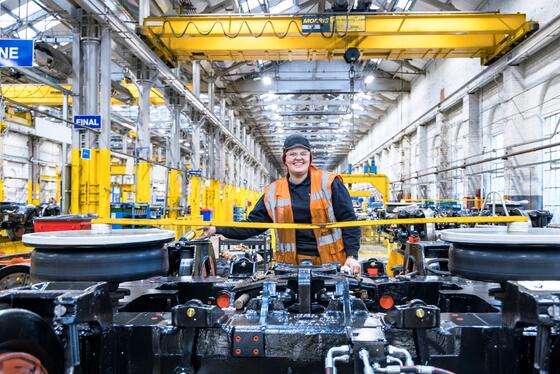
Bogie overhaul: Managing risk, complexity and performance beneath the train
Bogie overhaul: Managing risk, complexity and performance beneath the train
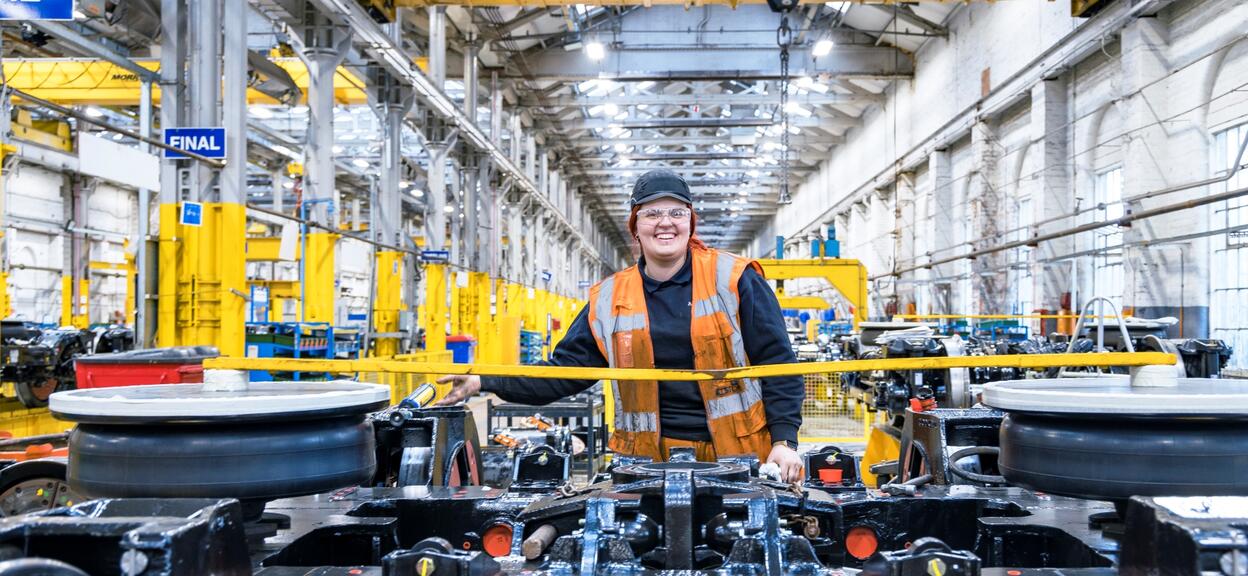
With hundreds of components and zero margin for error, bogie overhaul is one of the most demanding and safety-critical operations in a train’s lifecycle.
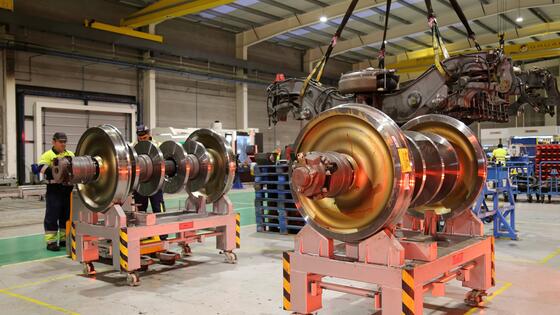
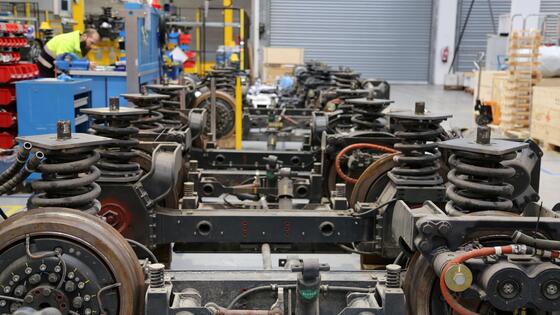
Bogies are the beating heart of the train. All the most critical equipment lives in the undercarriage, keeping the train operating safely and efficiently. Periodically overhauling the bogie is a necessary part of fleet maintenance, but it is also one of the most complex and unforgiving operations in a train’s lifecycle.
With hundreds of components, tight delivery windows and no margin for error on safety‑critical systems, bogie overhaul is where planning, expertise and execution are truly tested. As Juan Carlos Martin, Overhaul Managing Director in Pinto, Spain, and Mark Derbyshire, Site General Manager in Crewe, UK, explain, getting it right requires far more than routine maintenance.

Bogie overhaul is often seen as a routine maintenance activity, yet in practice it’s one of the most demanding parts of a fleet’s lifecycle. What makes it so challenging to get right?
MD: The hardest part is managing all the components that have to be replaced. Some parts are systematically replaced as part of the overhaul, which is relatively straightforward, but there will be other parts that need replacing after inspection. We have to anticipate the failures and make sure these parts are in stock. It is challenging because the delivery date doesn't change and everything has to be synchronised. There's no point in starting the bogie overall if the wheels are not available or if the traction motor is not available. There is a lot of planning up front in doing an overhaul.
JCM: Yes, it is quite challenging trying to guess, in advance, the percentage of items that will need replacing. We are inspecting some of the most important equipment on the train: the traction motors, brakes, suspension, etc., which are critical in terms of railway safety. In some cases, our customers don't have enough space to store bogies, so we have to synchronise all of the tasks we do at the site, as well as synchronise with our customer over when to deliver the bogie back to them. The challenge lies in synchronising all of the processes.
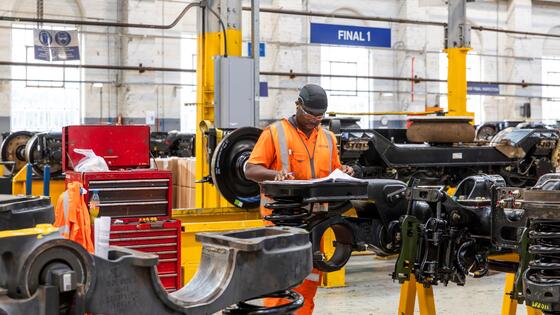
Against this backdrop, Pinto and Crewe bring different strengths to bogie overhaul. How would you describe the distinct focus of each site, and the types of challenges they are best suited to address?
JCM: In Pinto, we are one of the newer sites in Alstom, combining three previous facilities carrying out different kinds of maintenance operations in Spain and bringing together three experienced teams under one roof. We are not at the production level of Crewe; it is a much smaller place. We are focused on being as flexible and agile as we can be, accommodating our customers’ needs within our schedule and working out ways to collaborate with them to get the best turnaround times we can.
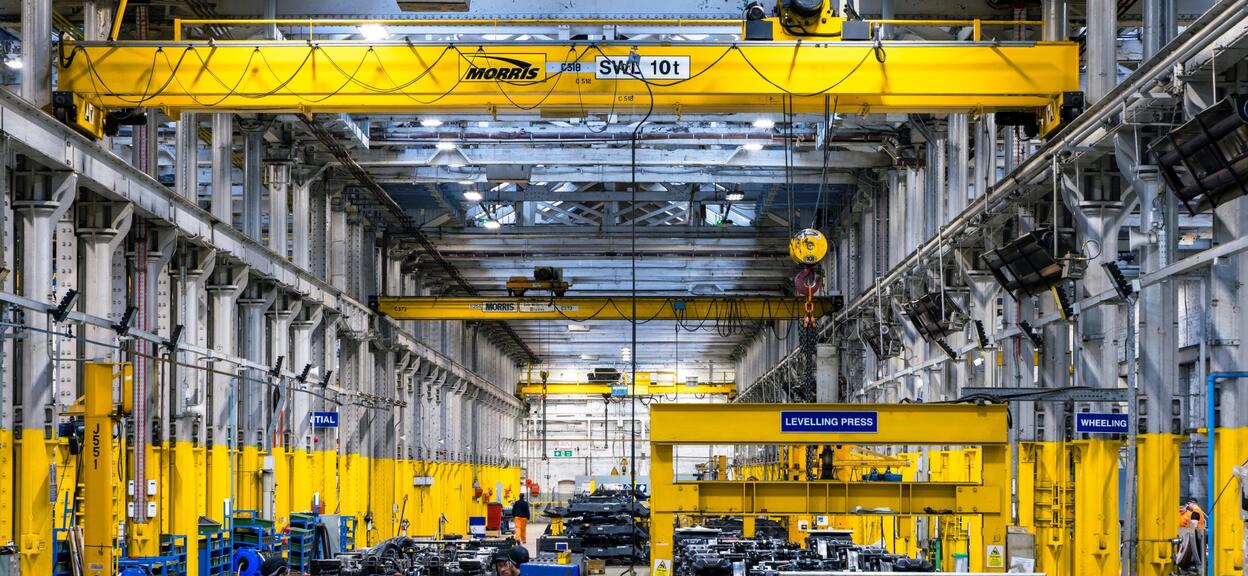
MD: The Crewe site is pivotal for the Alstom UK services footprint. Six in 10 trains that run in the UK are maintained by Alstom. It is a big site, with capacity to overhaul 4,000 bogies per year. Crewe acts as the engine room for all of UK Services’ maintenance activities. Our strengths are in the economies of scale we offer. We have full engineering and industrial teams based in Crewe, working for Crewe. Because of the size and expertise that exists within Crewe, it allows Alstom Services to plan bogie overhauls that deliver no surprises. We deliver a high-quality overhaul at an agreed time and an agreed cost.
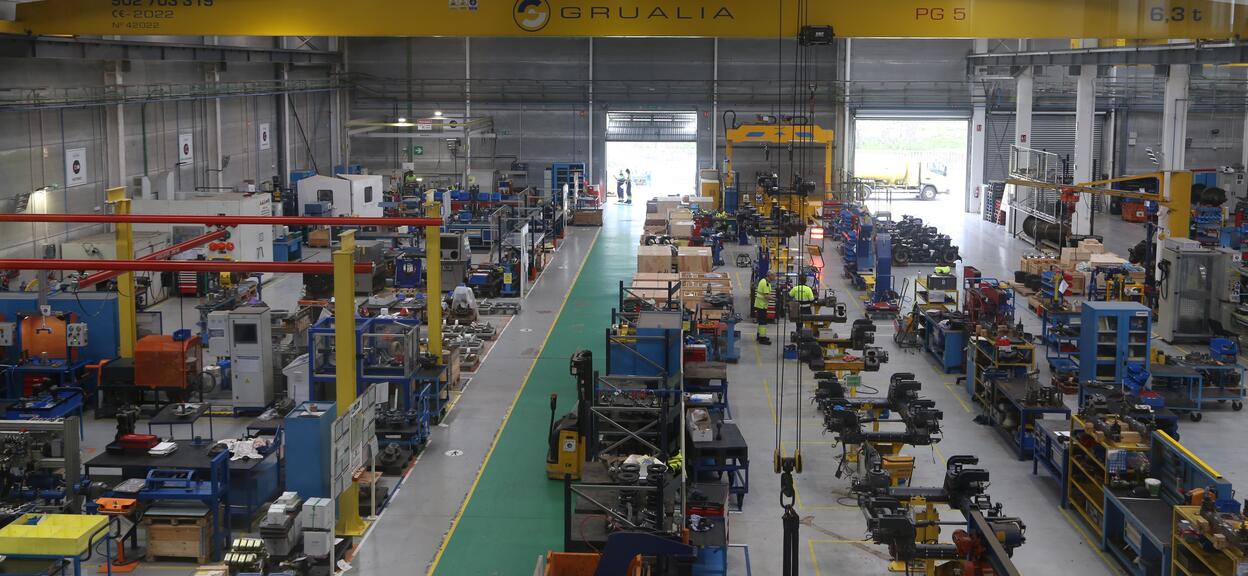
Bogie overhaul is a safety-critical and availability-driven activity. What, in your experience, builds real trust with customers – and how does Alstom demonstrate that trust in day-to-day delivery?
MD: We are the experts. We've overhauled thousands of bogies and hundreds of thousands of components. We've got experts in every part of the process, from the team doing the overhaul to the teams planning the delivery; from the quality teams ensuring the standards to the engineering teams looking at the products and then advising the supply chain on which parts are needed. Choosing Alstom for a bogie overhaul takes the headache away and de-risks the customer. We deliver quality, at an expected cost and at the expected time.
JCM: Exactly. I would add a point about transparency. We let our customers know exactly where their equipment is during the overhaul, we share our documentation and data, test results, etc., and that makes them confident in us. They also know that the whole of Alstom is behind us, not just the local experts, but also international specialists across a wide range of components and technologies, including experience supporting bogies from different manufacturers. Routine maintenance can often be managed in a predictable way. But bogie overhaul is different: with its many unforeseen technical challenges, it demands depth of expertise and the ability to resolve issues as they arise. This is where Alstom’s know‑how becomes a decisive advantage.
When you’re dealing with safety‑critical equipment, digitalisation becomes essential. It gives us greater control over how work is carried out and how quality is assured.
Digitalisation plays an increasingly important role in maintenance. How are digital tools enhancing the overhaul process and customer experience?
JCM: For us, digitalisation goes far beyond a set of IT tools. This is the way we run the business. Our customers may be worried about the level of digital technologies embedded in their equipment, so we can show them what is available and affordable in the bogie. Customers may be worried about the configuration management of their equipment and the traceability of single devices within the bogie. We can guarantee each step of the process from before the bogie arrives at our sites to after we send it back to the customer. All tasks are registered digitally, any reports of the testing are digitalised and the whole process is digitalised. Digitalisation is not separate from the processes; it is the process itself.
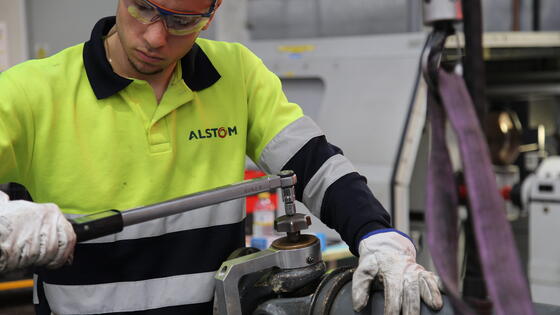
MD: When you’re dealing with safety‑critical equipment, digitalisation becomes essential. It gives us greater control over how work is carried out and how quality is assured. Digital tooling is far superior to analogue type tooling, for example, intelligent torque wrenches to improve fixings and joints. But it goes beyond, into digital work instructions that assist in the speed of data analysis. Customers are more interested in seeing where quality can be improved and how their specific issues are being dealt with, so, digitalisation and customer experience pretty much go hand in hand.
Looking ahead, how are your teams evolving your overhaul processes to strengthen fleet resilience, optimise lifecycle costs and adapt to the changing needs of operators?
JCM: We learn from one customer to another, from one project to another and from good practices. We also learn through digitalisation, which gives us plenty of data to establish KPIs and improve processes. We are also learning from experiences at Crewe and from our team here in Pinto. We feed all this into improving our processes.
MD: The ongoing evolution of our processes is improving the reliability and availability of assets, which allows a review of the periodicity of the overhaul instructions. So, if we can provide a bogie that goes beyond the planned periodicity, that gives better availability to our end customers, improving lifecycle costs. For example, engineering teams will ask us to change a bearing at 750,000 miles. We can do a vibration analysis in Crewe that finds we don’t need to change it until 1,000,000 miles, improving both availability and maintenance costs. This kind of approach reflects how we combine technology with engineering know‑how to help customers make better long‑term decisions about the resilience and lifecycle performance of their fleets.
Ultimately, the evolution of bogie overhaul is being driven by a combination of technology, industrial know‑how and experience gained across fleets and projects. This translates into greater transparency, improved availability and better control of lifecycle costs, outcomes that operators increasingly expect as they focus on the long‑term resilience of their fleets. This is where Alstom’s bogie overhaul expertise, delivered through its FlexCare Sustain™ services portfolio, creates lasting value.

