


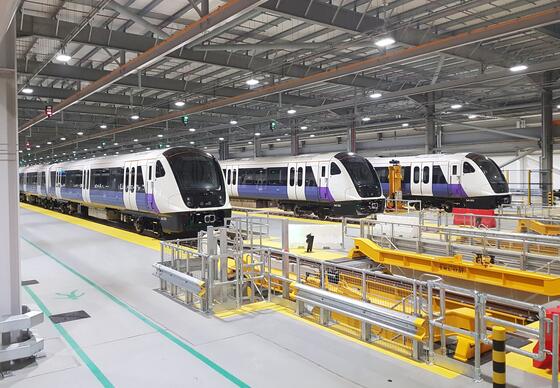
Total cost of ownership: how Alstom’s Adessia commuter trains provide the best value for money
Total cost of ownership: how Alstom’s Adessia commuter trains provide the best value for money
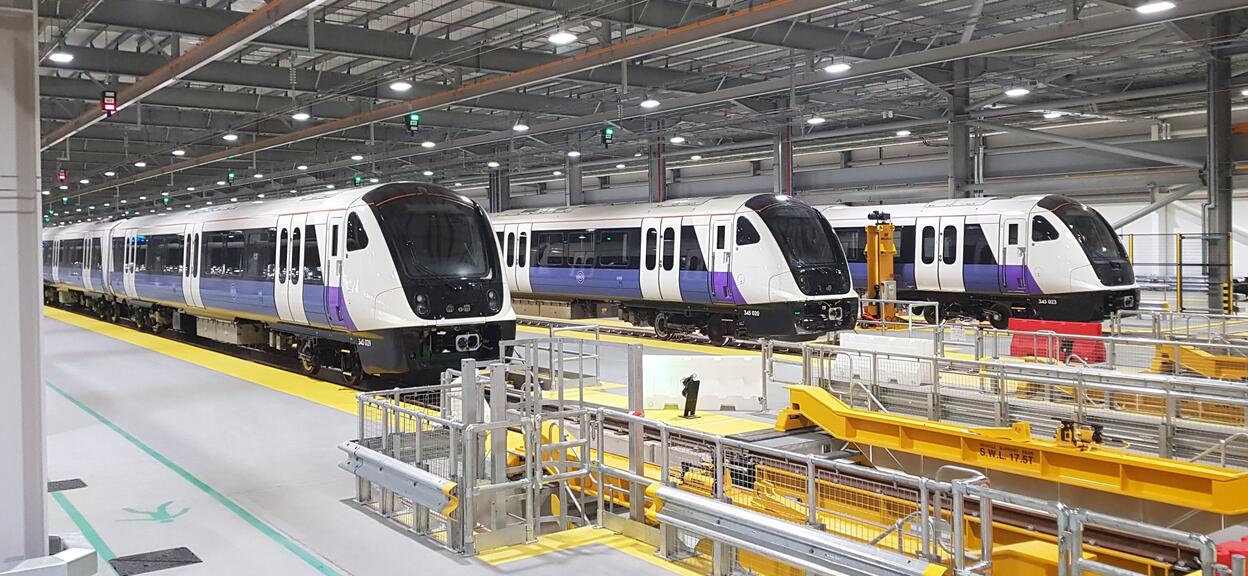
What if the train with the lowest price you can buy today turns out to be the most expensive decision over the next 30 years?
As energy prices rise, sustainability targets tighten and fleets are expected to operate reliably for decades, railway operators are increasingly rethinking how they define value. Total cost of ownership (TCO) is no longer a purely financial concept - it is becoming a strategic lever that shapes train design, operations and long-term reliability by taking functional and performance targets over the train’s lifetime into account. This leads to improvements in energy consumption, preventive maintenance, digital solutions and so much more, making TCO an enabler for innovation and sustainable mobility.
All of this is especially interesting for versatile commuter trains as they make urban life accessible for millions. By extending service within or beyond existing urban, suburban and regional rail networks, they help boost the economic power of cities and their surrounding areas.
In this article, we explore how a TCO driven approach is transforming commuter rail procurement, and how operators can turn lifecycle thinking into measurable economic, environmental and operational benefits.

Stefan von Mach, Bid Technical Manager for Alstom’s Commuter Rolling Stock Platform, went from collecting trainsets as a boy to studying mechanical engineering in Bordeaux and Glasgow, before obtaining a Masters in Rail Vehicle Engineering from the Technical University of Berlin. Stefan previously spent several years as Chief Engineer at Alstom, developing and homologating Europe’s first Li-Ion battery train. Stefan is also a talented linguist, with several European languages under his belt.
Connect with Stefan on LinkedIn!
What is Total Cost of Ownership?
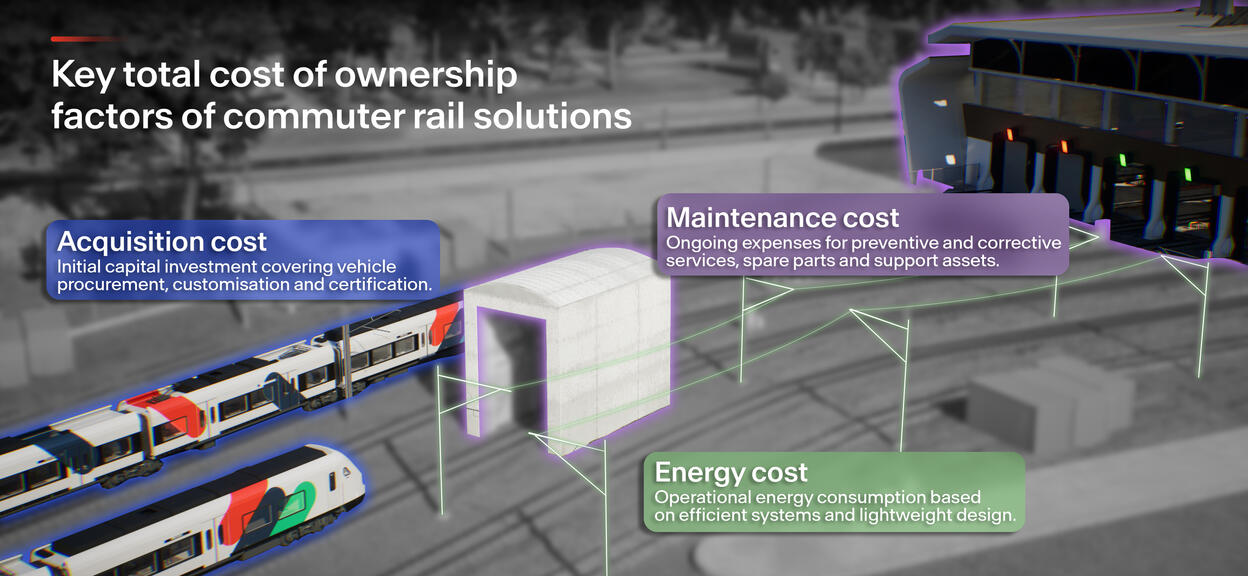
TCO is a financial estimate used to help operators assess the complete cost of acquiring, operating, and maintaining a product, service or system over its entire lifecycle. TCO takes into account not only upfront costs, such as purchase price, installation and setup, but also ongoing costs, such as energy consumption, maintenance, support, training, operational expenses, and potential downtime.
|
TCO factors |
What is included |
Alstom solutions to reduce cost |
|
Acquisition cost |
|
|
|
Maintenance cost |
|
|
|
Energy cost |
|
|
Why should commuter rail operators adopt a “TCO approach”?
Thinking about TCO before making a purchase helps operators to make more informed decisions about their investments. Not only will it reduce costs in the long term; it can help them anticipate and plan infrastructure management and maintenance activities. This approach is particularly important in the railway industry where the trains run for at least 30 years, meaning that long-term reliability, efficiency, and operational continuity are critical factors in decision-making.
Optimising TCO isn’t just good for the operator – when you optimise the train design with a view to improving energy efficiency and requiring fewer spare parts, it’s also good for the environment. Finally, passengers benefit from affordable ticket prices fostering greater accessibility to public transport.
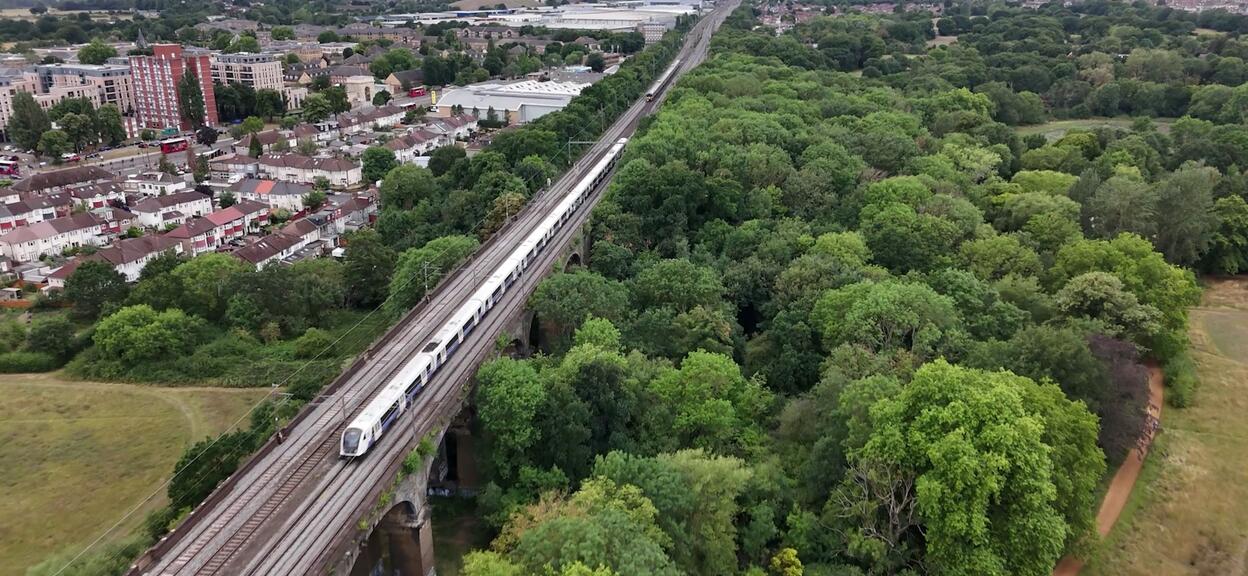
Aventra™ commuter trains for London’s successful Elizabeth line
How does Alstom offer commuter solutions with optimised TCO?
Building a TCO-optimised train calls for energy-efficient propulsion systems, lightweight materials and maintenance-friendly designs. Alstom has all of these capabilities, as demonstrated by our new, highly standardised product platform Adessia™.
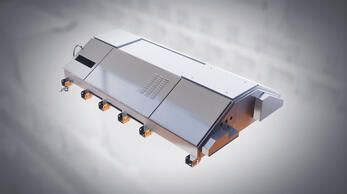
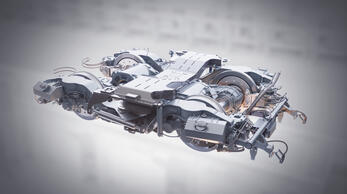
Adessia commuter trains are composed of Alstom’s state-of-the-art subsystems, continuously adapted to the new technology development, all of which undergo constant optimisation and can be customised as required. This allows us to offer the very latest energy efficiency technologies, such as our lightweight Flexx Eco™ bogie, energy-efficient HVAC systems, traction heat recovery technologies, digital solutions, and more.
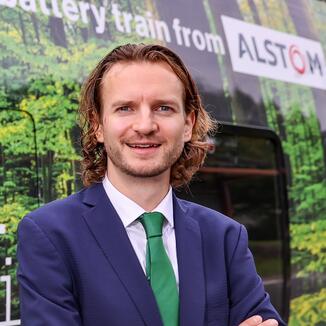
“With carbon emissions and operating costs on the rise, rail operators are forced to rethink. Embracing a total cost of ownership approach helps them meet decarbonisation objectives while creating long‑term economic value for their communities.”
Working with experts all over the world, we use sophisticated optimisation tools, simulations and algorithms to offer TCO-optimised trains to our customers. Alstom backs up all of its TCO optimisation calculations with guaranteed cost savings for our business partners.
But Alstom is not just a manufacturer; we are the market leader in rail services, and operate and maintain fleets around the world, including commuter train fleets such as Metrolink in Southern California, USA, and GO Transit in Canada. Our operations and maintenance experience gives us much greater insight into how our trains perform, and allows us to close the design loop with the feedback from maintenance to continuously optimise our solutions for TCO.
Can you give us some examples of the benefits of TCO for commuter rolling stock purchasers?
TCO optimisation, in combination with new technologies, can be a real game-changer for operators. One of the clearest examples of this is battery technology. In addition to offering lower operating and maintenance costs in comparison to diesel propulsion systems, electric traction systems (including batteries) help operators meet sustainability goals: their high efficiency helps to reduce energy consumption by enabling braking energy recovery, resulting in lower CO2 emissions. Even taking diesel and electricity price fluctuations and national differences in electricity price into account, fleet owners and decision-makers are finally starting to accept battery operation as a realistic, cost-effective alternative to diesel.
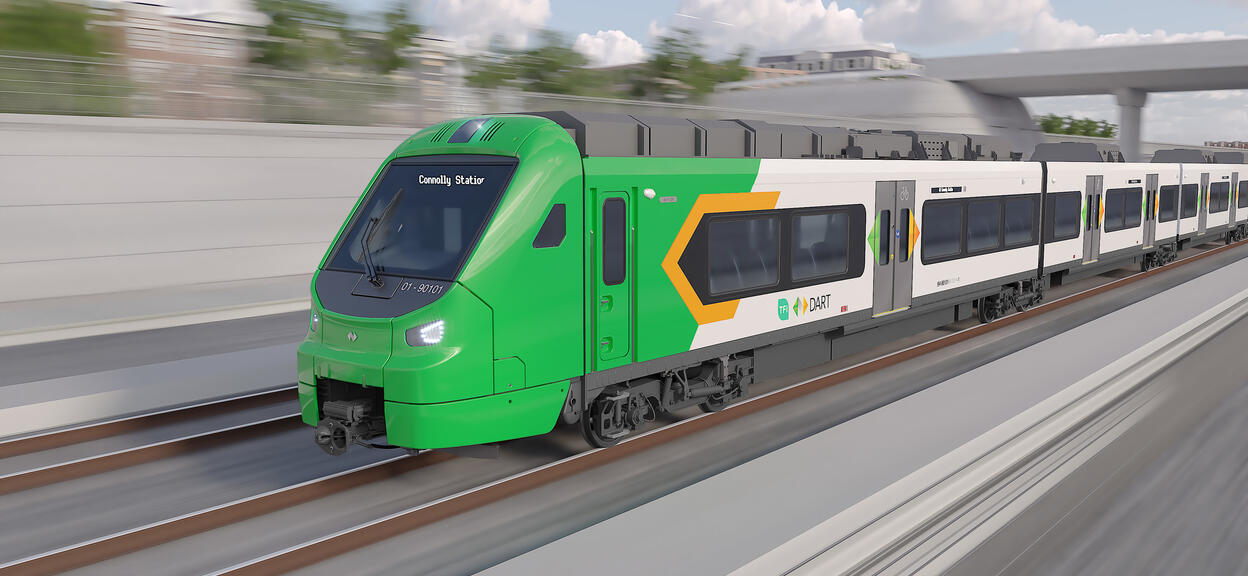
The DART commuter network in Dublin, Ireland, and the Greater Wellington commuter network in New Zealand are great examples of how battery technology and train optimisation can lead to winning bids – outperforming competitors offering dieselbased alternatives. In both cases, the Adessia Stream B™ battery commuter trains feature lightweight aluminium carbodies and semisuspended articulation, significantly reducing overall train mass. By minimising both the number and the complexity of bogies, both operators benefit from lower energy consumption, simplified maintenance, and improved longterm operational efficiency.
In addition, selecting battery electric propulsion not only enables zero direct emission operation but also leverages the high energy efficiency of batteries to further optimise TCO for non-electrified networks. This approach supports national decarbonisation goals while delivering lower lifecycle costs, and a future ready mobility solution.

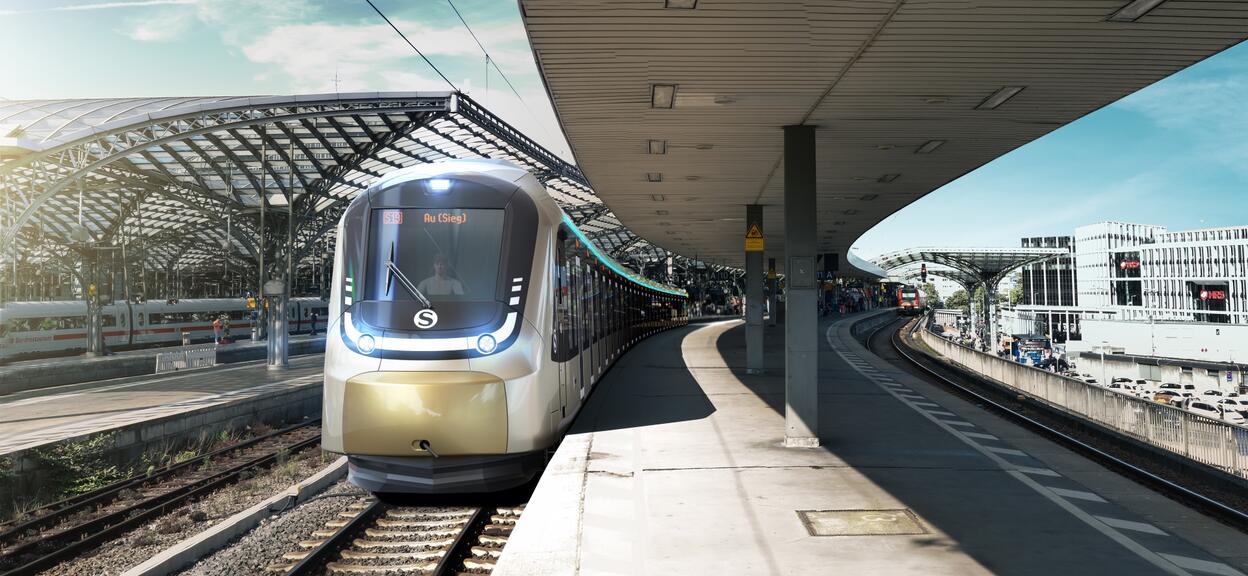
As energy costs continue to rise, rail operators are also increasingly focused on longterm efficiency. For S-Bahn Rheinland, Germany, we engineered the Adessia Stream™ vehicles to optimise TCO by providing exceptional energy efficiency throughout its entire lifecycle. The articulated architecture and lightweight carbody significantly reduce mass and energy demand, while the highly efficient Mitrac Power™ traction system, motors, and auxiliary converters ensure optimal performance with -maximised efficiency. To further drive energy efficiency, we pair the advanced vehicle design with the latest digital and signalling technologies. S-Bahn Rheinland fully integrates the European Train Control System (ETCS), and a Connected Driver Advisory System (C‑DAS). By delivering digitally-enhanced Adessia Stream vehicles, we lower operating expenses, extend component lifetimes, and provide SBahn Rheinland with one of the most economical and sustainable commuter solutions on the market.
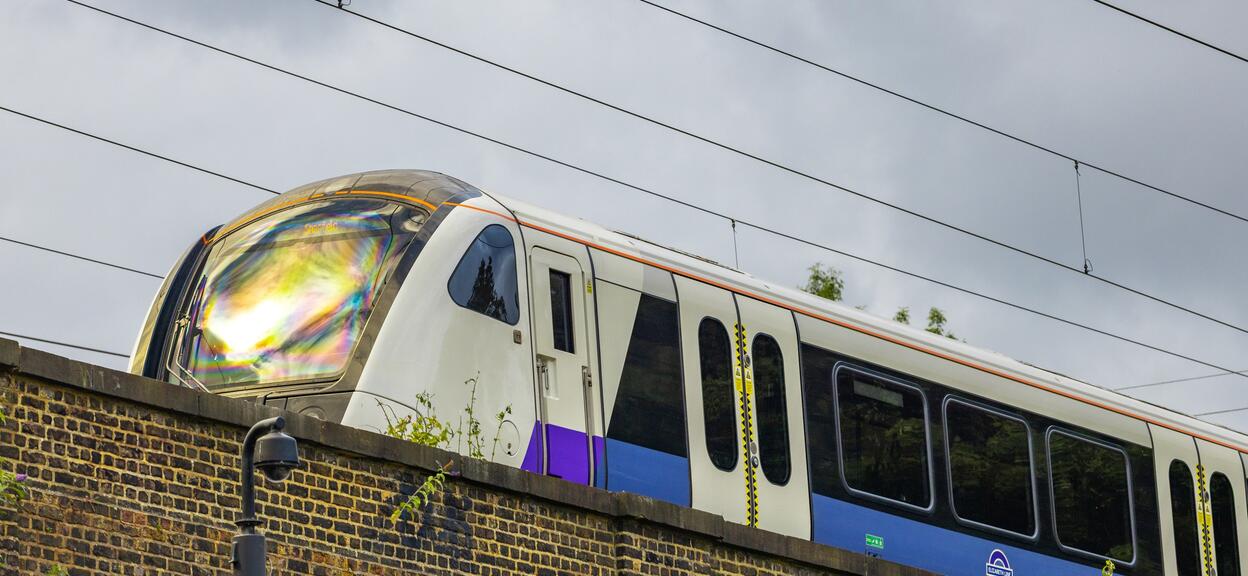
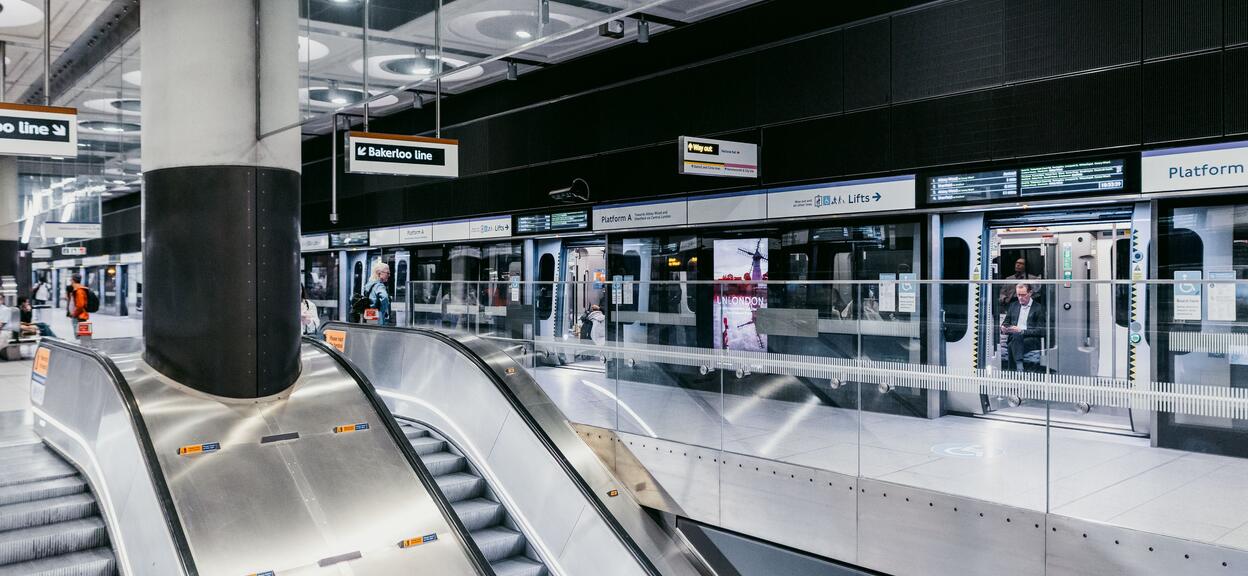
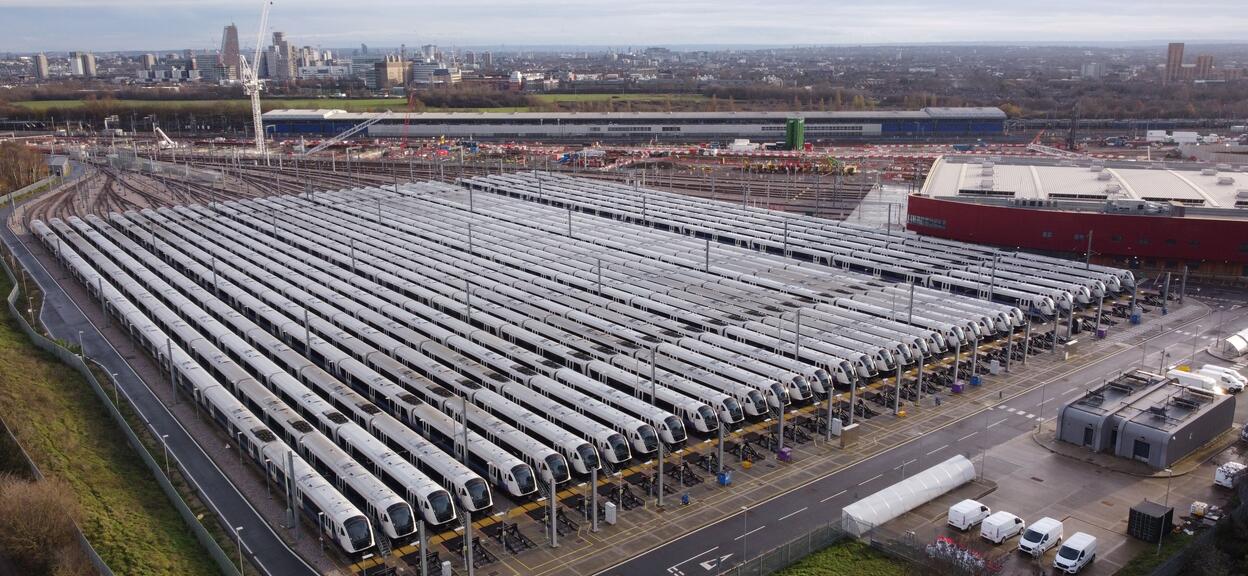
Finally, our Aventra™ commuter train fleets in the United Kingdom, such as for London’s successful Elizabeth Line, demonstrate how TCO can be optimised to reduce maintenance costs, increase availability and enhance sustainability. We integrated the latest maintenance technologies, such as an advanced fleet monitoring system, and Alstom’s automatic vehicle inspection system. This has allowed major component overhaul intervals to be extended by up to 50% compared to the previous generation of rolling stock, reducing total asset life costs and the impact of overhauls on vehicle downtime. It also resulted in significantly less raw material processed, manufactured and transported for maintenance, bringing major improvements to the sustainability of rolling stock over their full life.
What’s the best way for commuter solutions purchasers to adopt a TCO approach?
It’s all about communication! At Alstom, we are always happy to be in transparent technical dialogue with rail operators and business partners on requirements for new rolling stock including recent developments in railway technology. We propose to our stakeholders to focus on functional requirements in their specifications, rather than giving in-depth technical descriptions, which only closes the door to eventual optimisation down the line. We always recommend using business models that take the complete lifecycle cost including operational constraints into account.
There are several practical steps operators can take to ensure that TCO optimisation is embedded in their procurement processes. These include clearly defining performance expectations, introducing, measurable criteria in contracts, and requesting comprehensive lifecycle cost assessments from the tender stage onwards. Rethinking procurement today can define network performance for decades. A TCOdriven approach makes it possible to select the most costeffective commuter train over its entire lifetime, rather than focusing solely on the lowest initial purchase price. This is a decisive advantage for operators competing in increasingly demanding markets.
Finally, building long‑term partnerships with suppliers across the railway industry enables continuous innovation and the ongoing optimisation of entire transport ecosystems. This collaborative approach helps achieve the best possible balance between cost, performance and sustainability, leading to lower lifecycle costs, more affordable ticket prices for passengers, and a true win‑win outcome for public transport systems and the communities they serve.


