


Saving on energy: A system-wide approach to efficiency
Saving on energy: A system-wide approach to efficiency
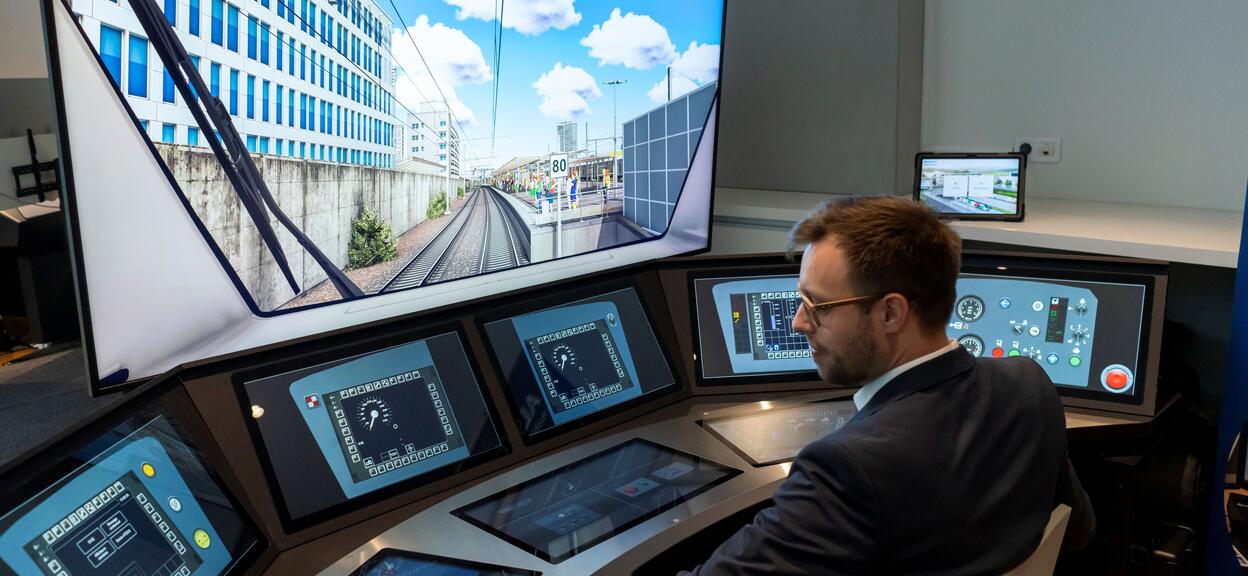
Rising energy costs, climate concerns, and evolving customer expectations are reshaping how trains are designed, as energy efficiency is moving from a “nice to have” to a decisive factor in rail projects worldwide. In this webstory, Samuel Hibon, Energy Efficiency Expertise Director at Alstom, shares why a system‑wide approach is now essential and how concrete technological and operational choices can deliver real, measurable energy savings.

Samuel Hibon is our Energy Efficiency Expertise Director. Based in Paris, he has been with the company for 18 years. He brings valuable knowledge from his background in development of locomotive, propulsion systems sizing and train systems engineering, consistently maintaining a strong focus on train performance and energy consumption. Samuel has led several R&D programs dedicated to energy efficiency and, together with his team, has developed methodologies and tools such as EnergX for train performance calculations. He also oversees the sizing of hydrogen and battery trains, along with the associated energy management strategies. In his spare time, Samuel enjoys astrophotography and technology.
Connect with Samuel on LinkedIn!

Why is energy efficiency, now more so than before, a decisive issue for rail operators worldwide?
Samuel: Fifteen years ago, energy considerations were only occasionally requested, and the overall cost of a project was largely determined by product expenses and associated maintenance. But beginning in the Nordic countries, the landscape began to shift around 2009, when the first tenders included in energy-related costs. After 2010, and even more markedly from 2014 onward, the influence of energy costs grew substantially, driven by the accelerating impacts of global warming and, later, by rising energy prices linked to geopolitical tensions and other contributing factors. Today, we see this trend has become widespread: from Southern Europe to India and even North America, energy considerations now play a significant, though varying role in project assessments.
How does Alstom’s approach help customers reduce their energy costs?
Samuel: At the core of Alstom’s identity lies a commitment to delivering the best technology, tailored to each customer’s needs. This means constantly balancing proven, cost-efficient designs and well controlled maintenance strategies with newer, potentially more efficient innovations. This tradeoff is assessed through a comprehensive Total Cost of Ownership (TCO) approach.
To support this, particularly during tender phase, Alstom has developed an in-house methodology and a suite of dedicated tools. By combining customer data and requirements with Alstom’s reference solutions and technological innovations, the team evaluates a wide range of configurations through detailed energy analyses. The expected energy savings for each specific customer use case are then weighed against the cost of the proposed solution.
Alstom is also supporting customers to reduce energy consumption for existing fleets through modernisation solutions. We have a smart modernisation catalogue with solutions to monitor and upgrade the energy performance of the train’s main energy consuming subsystems.
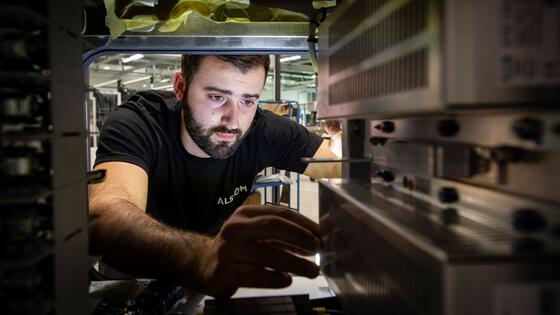
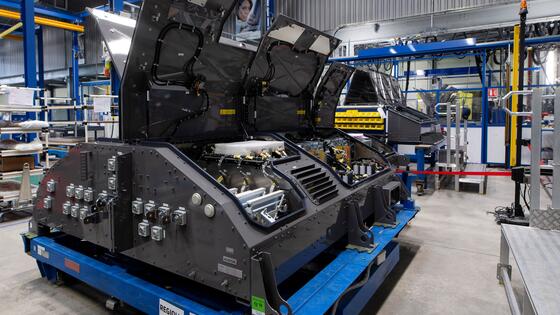
The choice of rolling stock components offer significant opportunities to cut energy costs. Traction for example, can represent up to 60% of overall energy loss. Which Alstom technologies have the biggest impact here?
When traction is said to account for around 60% of a train’s total energy consumption, it’s important to break down what this figure actually represents. In practice, depending on the train family, a substantial share (about half for a regional train) is connected to resistance to motion, while the second half comes from the efficiency limits of the traction system itself.
To put it simply, the traction drive provides the power needed to accelerate the train (creating kinetic energy), to climb gradients (creating potential energy), and to offset resistance forces caused by aerodynamics and mechanical friction. Producing these forms of mechanical energy requires converting electrical energy, and that conversion can never be perfectly efficient.
One major advantage of kinetic and potential energy is that they are recoverable. When a train slows down or descends a slope, part of that energy can be converted back into electricity, though always with losses. Both forms of energy are also directly proportional to the train’s weight. Resistance to motion, however, is pure loss and cannot be regenerated.
The path forward is clear: reduce train weight, improve aerodynamic performance/ efficiency, and adopt advanced traction technologies such as permanent magnet motors, three-level converter topologies and Silicon-Carbide (SiC)-based power electronics.

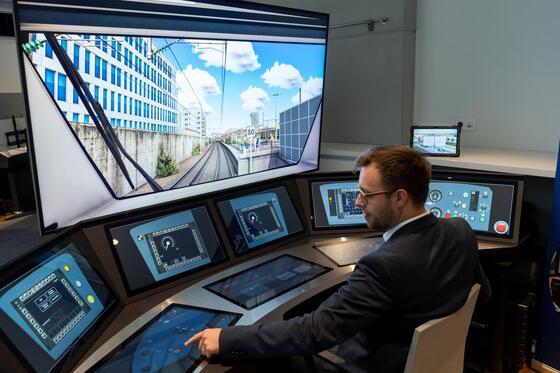
How does improving operational performance, such as eco-driving, translate into real energy savings for customers?
Samuel: Regardless of the train technology, operating conditions have a major impact on energy consumption, where the driving style is one of the most influential factors. Much like with a car, a more aggressive driving approach leads to higher energy use, while anticipating stops, avoiding unnecessary braking, or limiting acceleration on climbs can significantly reduce consumption.
This approach, known as eco-driving, is an area where Alstom provides dedicated solutions. The company has developed an in-house algorithm now deployed across several projects. Trials conducted in recent years have shown energy savings ranging from 5% to 15%, depending on initial conditions and timetable flexibility.
What energy savings can be related to factors like infrastructure?
Samuel: Infrastructure is another impactful lever to achieve an energy efficient rail system. One of the particular challenges in this area is that power supply-systems are often legacy installations shaped by historical decisions. Many choices were made decades ago, and operators must work within these inherited constraints.
An example is France’s 1,500 volt DC catenary system, introduced long before 1955, where recovering braking energy is extremely difficult. However, when a customer is developing an entirely new system, there is an opportunity to influence the design and improve overall efficiency.
For new DC metro networks, Alstom has developed a specialised substation known as Hesop™, already deployed in several cities: from metros in Riyadh, London, Dubai, Hamburg, Toulouse, Athens and Panama, Monorail in Santiago de los Caballeros, suburban trains in Napoli, to tramways in Sydney, Tel Aviv, Hannover and Braunschweig, Hesop's economic and environmental benefits have won over transport network owners globally.
This system can convert surplus braking energy from trains on the DC line into AC power that can be returned to the national grid. Only a few Hesop substations need to be installed alongside conventional ones to recover nearly 100% of the braking energy.
For a standard substation, Alstom offers technology that also will achieve exceptionally high efficiency levels, above 99%. The remaining losses stem from heating in the cables caused by the physical properties of copper. And on that point, of course, there is no escaping the laws of physics!
Which projects best demonstrate Alstom’s ability to deliver energy savings?
Samuel: Alstom’s commitment to energy savings is evident across several key projects. For example, the Avelia Horizon™ high-speed train reduces energy consumption per passenger by approximately 20%. This achievement is made possible through a combination of innovative train architecture that increases capacity, advanced aerodynamic design, and the integration of cutting-edge technologies.
Another example is the Coradia Stream H™ hydrogen trains that are set to deliver a remarkable 54% reduction in energy consumption compared to the Minuetto diesel trains.
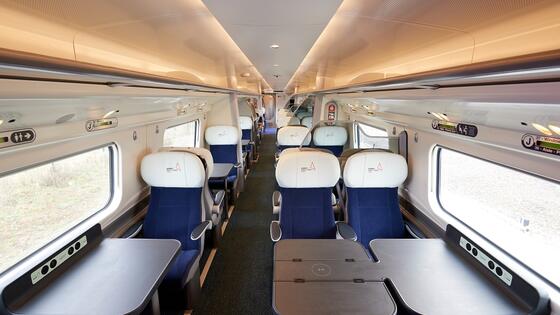
As part of the Avanti West Coast Pendolino modernisation project, we replaced the saloon lighting with efficient LED lights across 574 vehicles. This simple change cuts fleetwide lighting consumption by 1,750 MWh every year and translates into €350,000 in annual energy savings, proving that sometimes small upgrades can deliver big results.
Also, in terms of energy efficient design, Alstom has already achieved an impressive over-all 25.7% energy saving for our rolling stock solutions compared to 2014 levels, thanks to a rigorous and ongoing process. Alstom’s reference solutions are evaluated under identical environmental conditions. Energy consumption per kilometre and per passenger is compared across successive generations of trains. Continuous progress in technology, architectural choices, and control system developments enable improvements in this increasingly challenging effort to reduce energy consumption. This not only showcases tangible results but also brings proof of Alstom’s clear target of 30% energy efficiency improvement by 2030, enabled by a broad portfolio of innovative technologies and significant investment in R&D.


