Train lifespan: lifecycle thinking for decades of performance
Train lifespan: lifecycle thinking for decades of performance
Cities and governments rarely get a second chance to make foundational mobility decisions. The assets selected today will set the rhythm of daily mobility, energy consumption, maintenance realities, passenger experience, and environmental impact for a long, long time.
In this context, it’s easy to see how rail is the best investment in mobility there is. A train’s lifespan is 30 to 40 years. They outlive cars, buses, and most commercial air planes. When a train is well designed and maintained, the investment pays off over decades of reliable service, stable performance, and controlled operating expenses
On the flip side, once a train enters service, it becomes a long-term partner. With decisions that shape performance for 30 or 40 years, there’s little room for guesswork. Every detail matters.
There may be no single definition of “perfect,” but in rail, our customers need trains that are reliable, efficient, and economical for life.
If procurement is a long promise, then value must be built-in, protected in operation, and renewed over time. That’s why at Alstom, we adopt a full lifecycle vision that starts with design, continues at service, is polished in maintenance, and evolves through modernisation.


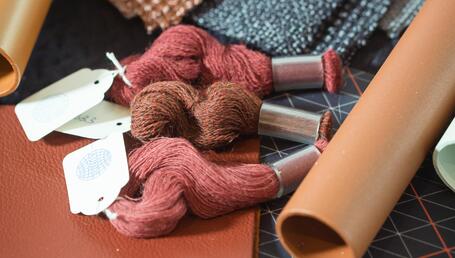
Eco-design conceptualised for the Flexity tram interior in Gothenburg, Sweden
Congratulations! It’s a train
A low purchase price can sometimes be a false economy. What matters (often more) is what it will cost to run, maintain, and keep relevant over its entire life. More commonly, the total cost of ownership (TCO).
The acquisition price of a train is typically only 20 to 30% of TCO. The remaining 70 to 80% are lifetime costs, comprised mainly of energy consumption and maintenance. Energy prices continue to rise, which is why a train only stays cost‑efficient if it’s energy-efficient.
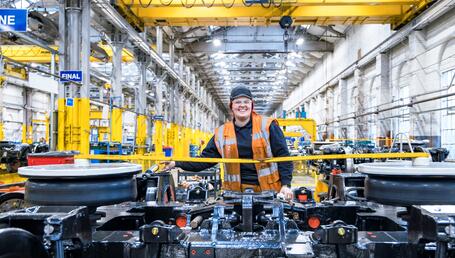
Before a train carries its first passenger, we can already address many fundamental priorities through eco‑design. Yes, designing a train for sustainability also makes it save energy, and therefore, save costs. We reduce resistance to motion, improve traction efficiency, recover energy, and improve auxiliary loads. We make lightweight designs that consume less energy. Even a bogie can cut lifecycle costs by up to 25% on some trains. Less mass to move means less energy consumed, less wear on components, and less money spent.
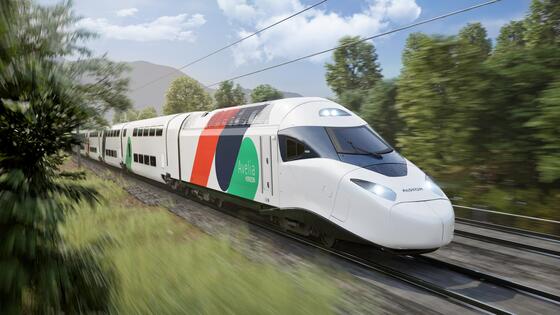
Look no further than our Avelia Horizon™ for an illustration of eco-design and TCO pointing in the same direction. It delivers the (high-speed) market’s lowest TCO per seat: 25% lower than competitors. Energy consumption per passenger drops by approximately 20%, through a combination of train architecture that increases capacity, advanced aerodynamics, and the integration of cutting-edge technologies. That’s how we make every kilometre cheaper to cover.
Committed for life
The ribbon cutting ceremony went well and our train is operating smoothly. Now let’s make sure it stays that way by avoiding impromptu maintenance.
An unexpected withdrawal from service costs far more than the repair itself. It hits availability, timetables, staffing, and chips away at passenger trust. Planned maintenance is predictable and can be built into operations. It’s the surprises that drive costs up and cause performance to slip.
Enter condition-based and predictive maintenance.
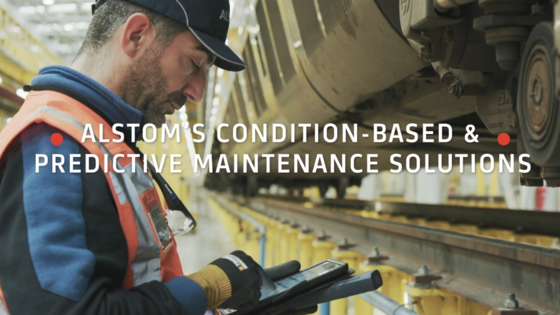
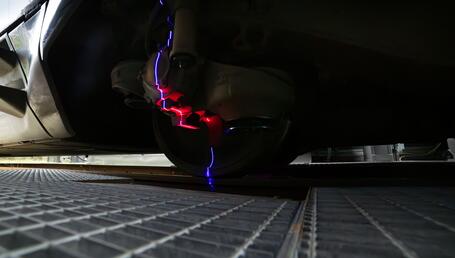
A few Journeys ago, we talked about HealthHub™ as our “digital crystal ball”. It sees everything there is to see in a train and turns large volumes of operational data into usable insights, so operators can trigger the right maintenance actions at the right time. Data from onboard and wayside sensors is processed through algorithms, visualised in a web interface, and translated into alerts when something drifts from its normal behaviour.
Issues are spotted before they turn into failures. Maintenance is planned rather than rushed, interventions can be scheduled when they don’t disrupt service, and trains stay where they belong: in operation. Fewer breakdowns, less downtime, and fewer awkward conversations with passengers.
Even better, it informs our operators when things are going exceptionally well. In one of our trains, monitoring showed that HVAC filters didn’t need routine three‑month changes, so we extended intervals to six or seven months. We save money, reduce unnecessary work, and keep assets available by doing maintenance when it’s needed, not when the calendar says so. Over a 40‑year life, that discipline adds up. And like eco‑design at the start, it’s another way good engineering continues to deliver long after we sell the train.
We can’t predict every change, but we can design for change. And when the train is already running, our very own “youth elixir” is smart modernisation. We bring today’s best technologies into existing assets to extend their life and keep optimal performance.
Forever young
No matter how “perfect” it is when it’s built, or how well it’s maintained, a train that’s 10, 20, or 30 years old must deal with the passage of time: new technology, new regulations, new passenger needs, and ordinary wear-and-tear. And it’s hard for any operator, city, or authority to know what will matter most two decades after a fleet enters service.
Short of replacing the train every time a new need arises, how do we keep aging fleets performing efficiently as technology continues to advance?
We can’t predict every change, but we can design for change. And when the train is already running, our very own “youth elixir” is smart modernisation. We bring today’s best technologies into existing assets to extend their life and keep optimal performance.
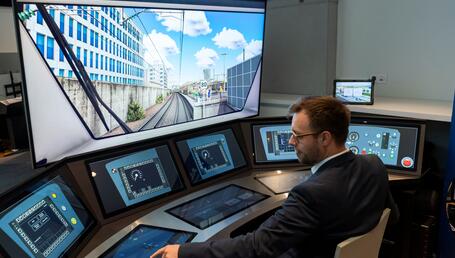
Smart modernisation focuses on what keeps trains reliable and affordable to run over time. Subsystems that drive operational performance and reliability (doors, braking, bogie‑track interaction, signalling, driver cabs) are upgraded. High‑consumption systems (traction, braking, onboard equipment) are modernised so energy use doesn’t creep upwards over time. And because passenger needs evolve too, things like interior design, accessibility and connectivity are brought up to current standards.
What makes this more than a clever idea is that we’re already doing it. Over 45,000 vehicles revitalised worldwide, supported by 28 modernisation sites and a presence across 30 countries. It doesn’t even have to be an Alstom-made train for us to modernise it.
Now to be perfectly clear: we don’t modernise just for the sake of it. In the Netherlands, modernising the VIRM city fleet generated significant savings, driven by an estimated 32 GWh reduction in energy consumption over its remaining life. And on São Paulo Metro lines 1 and 3, modernisation cut energy use by 50%, largely through advanced regenerative braking that captures and reuses energy. As you know by now, less energy means cheaper trains over time.

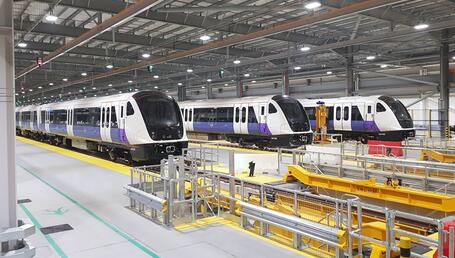
Maintenance services for the Italo's Avelia Pendolino in Nola, Italy
Through space and time
In our 40-year journey, value is shaped before the first bolt is tightened, protected every day the train runs, and renewed when time, technology, and expectations inevitably move on.
A manufacturer can build trains but if the goal is to optimise that value, it’s a rail (lifecycle) architect that’s needed. We think about a train before it exists, while it operates, and long after the newness has worn off.
Rail investments are often made with public money. They always depend on public trust. Side by side with our customers, our role is to fulfil that responsibility by designing trains that stay efficient, dependable, and relevant for a long time. When states and cities look back decades after their investment, they see that it was worth every penny.